Recipe:

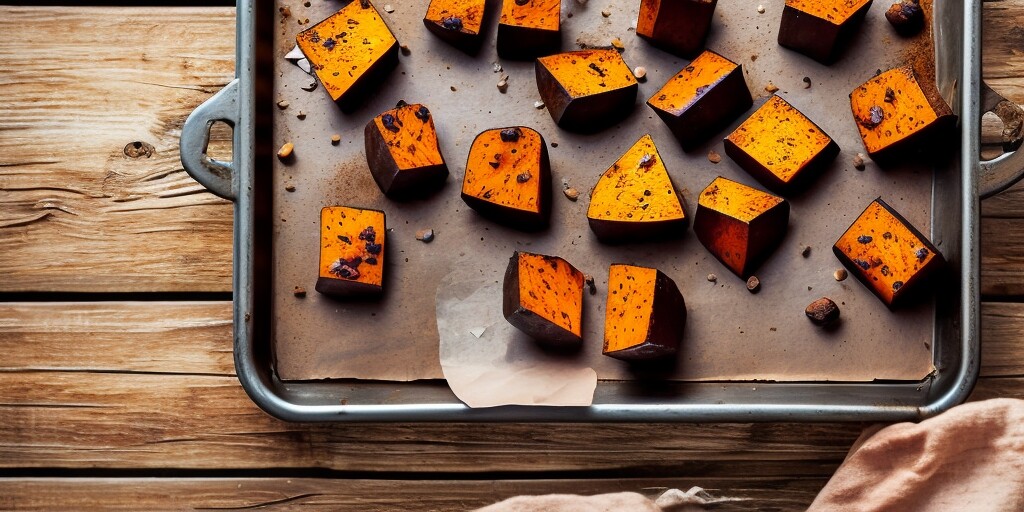
Crispy Roasted Sweet Potatoes
PREP TIME
15 mins
COOK TIME
45 mins
TOTAL TIME
60 mins
SERVINGS
4 servings
Ingredients
• 1 tablespoon cornstarch
• 1 1/2 teaspoons kosher salt
• 1/2 teaspoon smoked paprika
• 3 1/2 tablespoons olive oil, divided
• 2 large sweet potatoes (about 14 ounces each), peeled and cut into 3/4-inch pieces
Method
1 Preheat the oven to 450°F.
.
Preheat the pan:
Place a light-colored baking sheet on the center rack of the preheated oven and let heat for 5 minutes.
2.
Coat the potatoes:
Meanwhile, in a large bowl, whisk together the cornstarch, salt, paprika, and 2 1/2 tablespoons of the oil. Add the sweet potatoes
and toss to coat fully.
3.
Arrange the potatoes on the hot pan:
Carefully remove the baking sheet from the oven. Working quickly, drizzle the pan with the remaining 1 tablespoon of oil and tilt
the baking sheet to coat evenly. Pour the sweet potato mixture onto the preheated baking sheet and spread it into an even layer.
4.
Roast:
Roast until golden brown and crispy, turning with a spatula every 10 to 15 minutes, 30 to 40 minutes total. Remove from the oven
and let cool on the baking sheet for 5 minutes, then serve immediately.
For maximum crispness, these potatoes are best eaten right away. They start to soften the longer they sit after roasting. You can
refrigerate leftovers in an airtight container for up to 2 days and reheat in an air fryer at 350°F to get some of the crispiness back.
Love the recipe? Leave us stars and a comment below!
5.
FILED UNDER:
DINNERS MOST RECENT SIDE DISHES POTATOES
Nutrition Facts (per serving)
277
CALORIES
10g
FAT
43g
CARBS
4g
PROTEIN

Instructions:

Rewrite the provided recipe using the following:

Humanize the content: Use a natural, conversational tone. Vary sentence structure, include relevant anecdotes, and avoid repetitive phrasing.

SEO:

Perform thorough keyword research. Identify a primary keyword and 2–3 secondary keywords relevant to the article’s topic and audience.

Naturally integrate the primary keyword in the title (H1), first paragraph, and at least one H2.

Use secondary keywords in subheadings and body text, but avoid keyword stuffing.
    - Write a strong, click-enticing meta description with secondary keywords.
    - Use concise, descriptive, and engaging headings (H2/H3) with keyword variations.
    - Add internal links using descriptive anchor text where relevant.
- Structure:
    - Follow the provided outline and metadata template.
    - Use bullet points and numbered lists where appropriate for clarity and featured snippet optimization.
    - Limit paragraphs to 2–4 sentences for readability.
    - Bold key names and figures for emphasis.
    - Include impactful, properly formatted quotes (real or attributed to reputable sources).
    - Avoid generic AI phrases and ensure the article reads as if written by a seasoned journalist.
- Recency \& Relevance:
    - Only use facts, quotes, and data from sources published in the last 30 days unless essential historical context is required for clarity.
    - For each referenced source, include the publication date in the citation section.
    - Do not include outdated or unrelated historical events unless they directly explain or impact the current news event.
    - Focus the article on the specific news event or topic from the provided URL and avoid generalizations or summaries of past events.
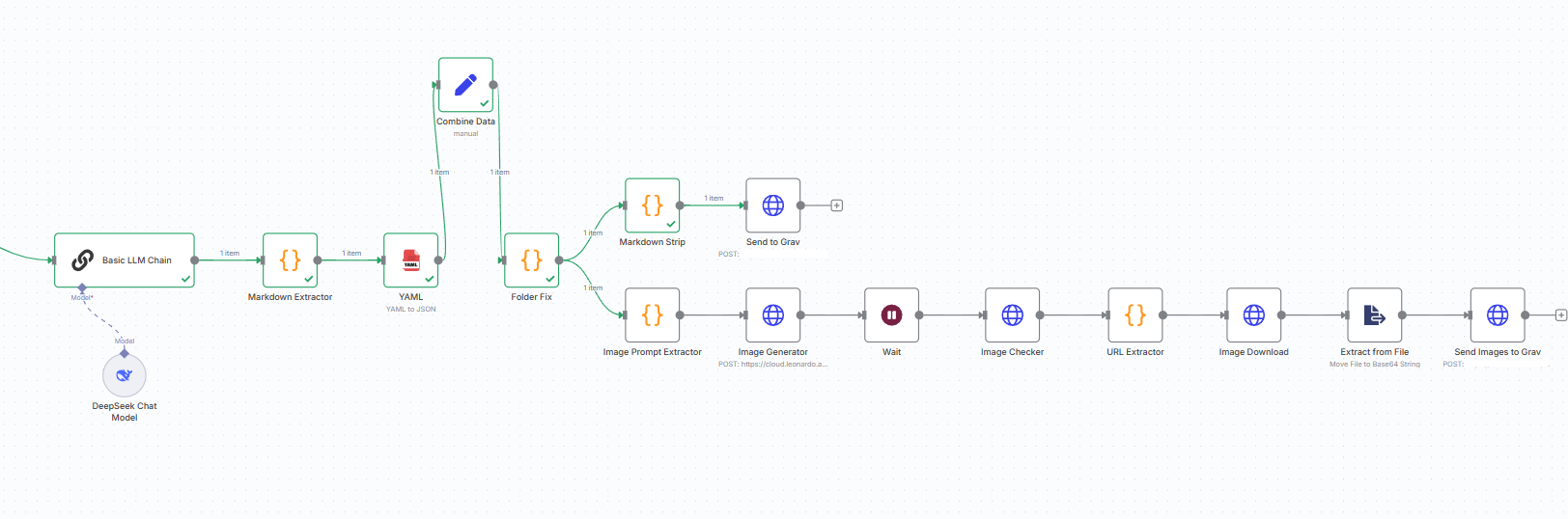
- Image Prompts for Leonardo.ai:
    - For the same article, generate:
        - A detailed prompt for a visually striking header image that captures the article’s main theme, using the Leonardo.ai prompt structure (subject, style, composition, background, lighting, mood). Suggest an SEO-friendly filename for this image based on the primary keyword.
        - One or two supporting image prompts, each with a unique, SEO-friendly filename relevant to key article points or sections.
    - Output all image prompts and filenames in the JSON structure below.

Article: {{ $json.url }}

1. Article Metadata Template:

---
title: "[Concise, <50 chars] Primary Keyword Phrase"
description: "[1-sentence summary with secondary keywords]"
author: "Johnny Larson"
date: "YYYY-MM-DD"
taxonomy:
    tags: [3-5 keywords]
    category: [1-2 broad topics]
og_title: "[Social-Media-Optimized Title]"
og_image: "[header_image_filename]"
---

2. Article Structure
Header (H1):

Lead with a breaking news hook or provocative question using the primary keyword.

Intro Paragraph:

Who/What/When/Where/Why (context and significance).

Thesis (core conflict or takeaway).

Section 1 (H2): Key Developments

3–5 critical facts (convert to paragraphs).

Embed quotes and data.

Section 2 (H2): Deeper Analysis

Expert commentary (real or synthesized).

Historical parallels or data trends.

Section 3 (H2): Stakeholder Reactions

Supportive and opposing POVs.

Public sentiment (social media trends/polls).

Section 4 (H2): What’s Next

Timeline of expected events.

Potential scenarios.

Closing (H3):

Forward-looking statement and call-to-action.

Citation Section linking back to referenced sources

*Note: Do not list each section (eg, Deeper Analysis). This is for your reference, use your own section descriptions.

3. Style Guidelines
✅ Use bold for key names/figures
✅ Short paragraphs (2–5 sentences)
✅ Bullet/numbered lists for clarity
✅ Insert 1–2 images (see prompts below)
✅ Minimum of 1500 words
❌ No nested bullets, fake quotes, or generic filler
❌ Do not make up or reference fake articles or links

4. Leonardo.ai Image Prompts
Output in this JSON format:

json
{
  "header_image_prompt": "A dynamic action shot of [subject], [artistic style], [composition], [background], [lighting], [mood].",
  "header_image_filename": "[primary-keyword-header].jpg",
  "supporting_images": [
    {
      "prompt": "A [description of supporting visual], [style], [composition], [background], [lighting], [mood].",
      "filename": "[seo-supporting-keyword-1].jpg"
    },
    {
      "prompt": "A [description of second supporting visual], [style], [composition], [background], [lighting], [mood].",
      "filename": "[seo-supporting-keyword-2].jpg"
    }
  ]
}
Each prompt should be pencil sketch/art style. Avoid depictions of children or graphic suffering.

Filenames must be unique, concise, and SEO-optimized for the article’s topic.

Key Restrictions:

❌ No children
❌ No graphic violence or suffering
✅ Use pencil sketch/art styles like in a courtroom

5. SEO Optimization
Primary keyword in H1, intro, and at least one H2

Secondary keywords in subheadings and body

Internal links with descriptive anchor text

Strong, keyword-rich meta title and description

Alt text for images (use filenames and descriptions)

Do not output any explanations or extra text. Only return the formatted article and the JSON image prompt block as specified.

**Output Format Rules:**
- Wrap the image prompt JSON in `###IMAGE_PROMPTS###` delimiters.
- Place the article Markdown after `###ARTICLE_CONTENT###`.
- Validate JSON syntax before outputting.
- No other text outside these blocks.

**Example Output:**
###IMAGE_PROMPTS###
{
  "header_image_prompt": "...",
  "header_image_filename": "seo-name.jpg",
  "supporting_images": [
    {"prompt": "...", "filename": "..."}
  ]
}
###IMAGE_PROMPTS###

###ARTICLE_CONTENT###
---
title: "Your Article Title"
---

Article body...